
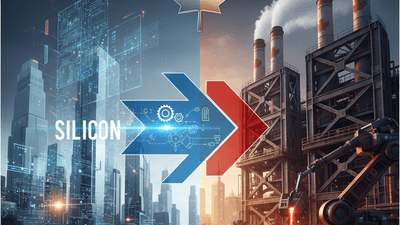



For decades, the narrative surrounding the Canadian economy—and by extension, the Canadian engineering landscape—has oscillated between resource extraction and the burgeoning tech sector. However, recent developments in March 2026 suggest a profound maturity in the ecosystem: a simultaneous expansion in deep-tech research and heavy manufacturing. As an engineering professional observing these shifts, the message is clear: Canada is no longer just digging things out of the ground or writing code in isolation; we are building the future of computation and the vehicles that move our society.
Two distinct yet interconnected announcements underscore this evolution. First, the University of Toronto and AMD have launched a major AI & Computing R&D Lab, cementing Toronto’s status as a global neural center for artificial intelligence. Simultaneously, in the prairies, the Manitoba government is celebrating the opening of NFI Group Inc.'s all-Canadian bus manufacturing facility in Winnipeg. While these initiatives may seem worlds apart—one dealing in nanometers and algorithms, the other in steel chassis and electric drivetrains—they represent the dual engines required for a robust national engineering sector.
The High-Performance Horizon: U of T and AMD
The collaboration between the University of Toronto’s Department of Computer Science and AMD represents a significant leap up the value chain for Canadian R&D. While academic-industry partnerships are not new, the scale and focus of this lab are particularly noteworthy for computer and electrical engineers.
This facility is not merely about software optimization; it is positioned at the intersection of next-generation hardware and advanced AI models. As Moore’s Law slows, the engineering challenge shifts toward heterogeneous computing—specialized architectures designed to handle specific AI workloads more efficiently.
"This collaboration aims to strengthen Canada's position as a global hub for innovation... focusing on cutting-edge AI and computing technologies."
Implications for the Engineering Workforce
For engineering professionals, this signals a demand for a hybrid skill set. The silo between hardware engineering (FPGA design, ASIC verification) and software engineering (machine learning models, compilers) is collapsing. The engineers who will thrive in this new lab—and the ecosystem it spawns—are those who understand how code touches silicon.
- Hardware-Software Co-design: Engineers must optimize algorithms specifically for the hardware that runs them, and vice versa.
- Energy Efficiency: A major focus of modern computing R&D is reducing the thermal design power (TDP) of AI clusters—a critical challenge for electrical and thermal engineers.
- Talent Retention: By establishing high-profile labs domestically, Canada offers a compelling reason for top-tier engineering talent to stay rather than migrating to Silicon Valley.
The Renaissance of Manufacturing: NFI Group in Winnipeg
While Toronto focuses on the virtual brain, Winnipeg is strengthening the physical body of Canadian infrastructure. The opening of NFI Group Inc.'s all-Canadian bus manufacturing facility is a triumph for the "Made in Canada" brand and a critical development for mechanical, industrial, and systems engineers.
This facility is significant because it represents a re-shoring of the supply chain. The facility is designed to engineer and build transit buses entirely within Canada. In an era of geopolitical uncertainty and supply chain fragility, having end-to-end domestic production capabilities is a strategic asset.
Engineering the Supply Chain
The NFI facility highlights the critical role of Industrial Engineering in modernizing production. Building a transit bus—especially modern electric or hybrid variants—requires complex systems integration.
- Process Optimization: Manufacturing engineers are needed to design assembly lines that can handle high variability (different bus configurations) with high efficiency.
- Sustainable Manufacturing: As transit shifts toward zero-emission vehicles (ZEVs), the manufacturing process itself is under scrutiny to lower its carbon footprint.
- Supply Chain Resilience: Sourcing materials and components domestically requires robust logistics and quality assurance engineering to ensure Canadian suppliers meet automotive standards.
Comparative Analysis: Two Pillars of Innovation
To understand the breadth of opportunity currently available to Canadian engineers, it is helpful to compare the requirements and impacts of these two major developments.
| Feature | AMD & U of T R&D Lab (Toronto) | NFI Group Manufacturing (Winnipeg) |
|---|---|---|
| Primary Sector | Deep Tech / Semiconductor / AI | Advanced Manufacturing / Automotive |
| Key Engineering Disciplines | Computer, Electrical, Software, Materials Science | Mechanical, Industrial, Mechatronics, Automotive |
| Strategic Value | Intellectual Property (IP) Generation | Supply Chain Security & Infrastructure |
| Output | Next-gen architectures & algorithms | Physical transit assets (Buses) |
The Convergence: Where R&D Meets the Factory Floor
While these announcements may seem distinct, the future of Canadian engineering lies in their convergence. The high-performance computing technologies being developed in labs like the one at U of T are the very tools that will eventually optimize manufacturing facilities like NFI’s.
Digital Twins and Predictive Maintenance are prime examples. Advanced AI models require the computing power AMD is researching. Once developed, these models can simulate a bus manufacturing line in Winnipeg to identify bottlenecks before they happen, or predict when a robotic welder needs servicing.
For the engineering professional, this means that cross-disciplinary knowledge is more valuable than ever. A mechanical engineer in manufacturing who understands the basics of AI implementation is a leader. A computer engineer who understands the physical constraints of an assembly line is an innovator.
Conclusion: A Call to Action for Canadian Engineers
The launch of the U of T/AMD lab and the opening of the NFI facility serve as bookends to a vibrant chapter in Canadian engineering. They demonstrate that the country is actively investing in the full lifecycle of innovation—from the spark of an idea in a research lab to the final bolt tightened on a production line.
For professionals in the field, the takeaway is one of optimism and adaptation. The opportunities are diversifying. Whether your passion lies in pushing the boundaries of machine learning or in the tangible satisfaction of building the transit systems of tomorrow, the domestic market is creating space for you. The challenge now is to bridge these worlds, leveraging our computational strengths to revolutionize our industrial capabilities.