
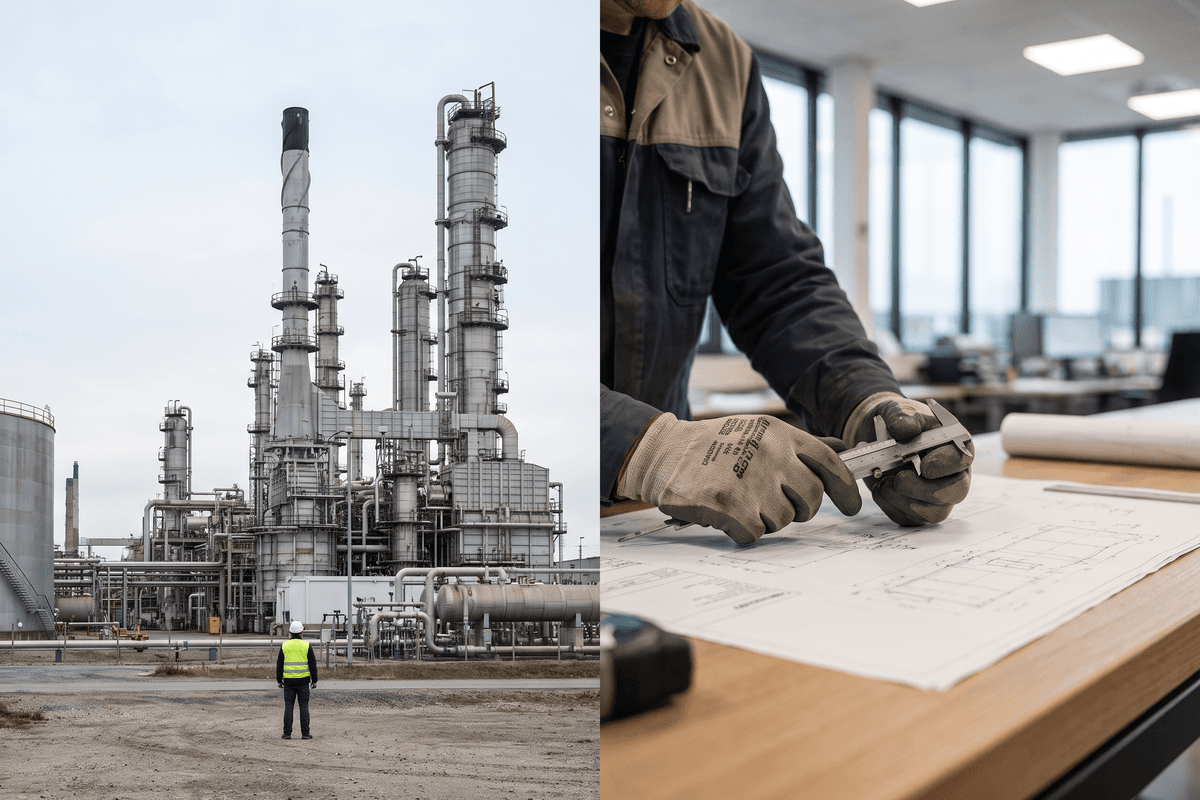



The Canadian engineering landscape is undergoing a structural bifurcation driven by two relentless forces: unprecedented global consolidation at the multi-billion-dollar enterprise level and razor-sharp technical precision on domestic industrial sites. As Montreal-based engineering heavyweight WSP Global Inc. intensifies its pursuit of European powerhouse Arcadis NV, engineering leaders across Canada are confronting a marketplace where global delivery scale must seamlessly interface with localized, modular execution and heightened operational risk management.
Whether navigating transatlantic mega-mergers, finalizing process engineering packages for critical mineral supply chains, or deploying artificial intelligence to mitigate supply chain volatility, Canadian engineering is transitioning from traditional project delivery to an integrated, highly industrialized model.
The $7.5-Billion Bet: Inside WSP’s Continued Pursuit of Arcadis
In a bold reinforcement of its global roll-up playbook, WSP Global reaffirmed its commitment to securing a friendly combination with Dutch engineering consultancy Arcadis NV, following an earlier $7.5-billion acquisition bid reported by BNN Bloomberg. The pursuit highlights how Canadian-headquartered engineering consultancies are consolidating specialized market share across Europe, North America, and the Asia-Pacific region to dominate energy transition, water resilience, and sustainable infrastructure mandates.
For Canadian practitioners, this relentless consolidation is reshaping the competitive ecosystem in several distinct ways:
- Global Discipline Integration: Combining WSP’s transport, property, and environmental practices with Arcadis’s established European remediation, urban design, and water engineering teams creates a cross-border talent pool capable of bidding on multi-billion-dollar sovereign infrastructure projects.
- Margin Expansion Through Synergy: Centralized digital engineering backbones—leveraging shared Building Information Modeling (BIM) workflows and unified enterprise resource planning—allow consolidated firms to drive down operational overhead while commanding premium fee structures for specialized advisory services.
- The Mid-Market Squeeze: As top-tier consultancies grow into 100,000-person juggernauts, mid-sized Canadian consulting firms must either carve out hyper-specialized technical niches or become regional targets for international acquisition.
"The engineering sector is witnessing a consolidation wave driven not simply by headcounts, but by the imperative to assemble comprehensive, end-to-end technical capabilities spanning from initial environmental permitting to automated lifecycle asset management."
Domestic Execution: Electra’s Cobalt Refinery Engineering Reaches Substantial Completion
While global mega-consultancies expand balance sheets abroad, critical domestic engineering milestones are being logged in Canada’s resource corridors. In Northern Ontario, battery materials innovator Electra Battery Materials confirmed that core engineering deliverables and facility design are substantially complete for its hydrometallurgical cobalt refinery in Temiskaming Shores.
The transition of a specialized process facility from detailed engineering design to construction execution represents a critical proof point for Canada's onshore critical minerals strategy. Achieving substantial completion on core engineering deliverables requires rigorous multidisciplinary alignment:
- Hydrometallurgical Flowsheet Finalization: Locking in piping and instrumentation diagrams (P&IDs), solvent extraction stage modeling, and process control logic to handle variable feedstock chemistries with minimal reagent loss.
- Modular Skid Optimization: Transitioning from site-built mechanical systems to offsite-fabricated process skids, reducing Northern Ontario field-labour hours and compressing mechanical completion schedules.
- Environmental Permitting and Effluent Controls: Embedding zero-liquid-discharge (ZLD) systems and state-of-the-art closed-loop water treatment circuits directly into the structural and civil engineering foundation packages.
The milestone reflects a broader maturation in Canadian industrial engineering: design teams are now delivering process packages that de-risk future project financing rounds by eliminating late-stage scope churn before major capital equipment is placed on site.
The Industrialization, Intelligence, and Risk Convergence
The contrasting scales of global M&A and specialized chemical plant engineering are bound together by fundamental shifts in how Canadian infrastructure is priced, insured, and built. According to an industry analysis by Arthur J. Gallagher on Canadian construction and engineering trends, three macro drivers are actively reshaping sector execution: industrialization (modularization), intelligence (AI workflows), and sophisticated risk management frameworks.
The report details how the surging data centre market, domestic energy revivals, and persistent labour constraints are forcing engineering firms to rethink traditional delivery models.
| Market Driver | Operational Impact on Engineering | Primary Risk Mitigation Mechanism |
|---|---|---|
| Global Consolidation (e.g., WSP-Arcadis) | Cross-border engineering pooling, standardized digital toolchains, global procurement leverage. | Enterprise-level professional liability scaling and integrated cross-jurisdictional governance. |
| Process & Mineral Refining (e.g., Electra) | Stringent chemical process tolerances, equipment supply-chain lead times, modular skid fabrication. | Front-End Engineering Design (FEED) stage-gate verification and early vendor data integration. |
| Data Centre & High-Tech Infrastructure | Compressed design cycles, high-density power distribution, complex liquid cooling integration. | Design-assist contracts, prefabrication modeling, and AI-driven predictive supply-chain scheduling. |
1. The Industrialization of Engineering Delivery
Traditional stick-built construction is rapidly giving way to Design for Manufacture and Assembly (DfMA). Canadian structural, mechanical, and electrical engineers are increasingly required to design components that can be assembled in controlled factory environments and transported to site with minimal field rework. This trend is especially pronounced in Northern industrial builds and modular substation engineering for data centres.
2. Intelligence-Driven Workflows
Artificial intelligence has transitioned from an exploratory visualization tool into an active engineering productivity engine. Leading firms are utilizing AI-driven structural optimization algorithms to reduce embodied carbon in concrete and steel designs by up to 20%. Concurrently, machine-learning-driven project management tools are parsing thousands of submittals, RFIs, and vendor drawings in real time to predict project delays weeks before they manifest on site.
3. Risk Governance and Insurance Alignment
With megaproject cost inflation and contract disputes remaining acute industry concerns, engineering firms are tightening risk allocation clauses. Gallagher's insights highlight that engineering and construction firms are actively deploying wrap-up liability, owner-controlled insurance programs (OCIPs), and performance-based contracting to shield balance sheets against volatile material costs and equipment delivery bottlenecks.
Actionable Takeaways for Canadian Engineering Leaders
To navigate this evolving landscape, consulting engineering executives, project managers, and technical specialists should implement several immediate strategic pivots:
- Invest in DfMA Competencies: Train design teams in modular fabrication standards and parametric design tools to capture value in fast-track industrial and data-infrastructure sectors.
- De-Risk Industrial FEED Work: Emphasize comprehensive Front-End Engineering Design (FEED) discipline before issuing procurement packages, following the disciplined delivery model demonstrated in successful refinery and processing developments.
- Formalize AI Governance: Establish clear verification frameworks for AI-assisted engineering calculations, ensuring professional engineers maintain direct oversight and ethical accountability for all algorithmic outputs.
- Leverage Scale Without Losing Agility: For mid-tier firms, establish strategic joint ventures or technology partnerships to bid alongside global conglomerates while retaining nimble, region-specific technical responsiveness.
The Road Ahead
As WSP’s pursuit of Arcadis illustrates, the global consolidation of engineering services shows no signs of slowing. Yet, the true test of this mega-firm era lies in execution at the facility level—whether completing complex hydrometallurgical refining circuits in Ontario or delivering mission-critical power for data centres. The future belongs to those organizations that can combine massive global scale with precision-engineered, modular, and risk-resilient execution on the ground.