
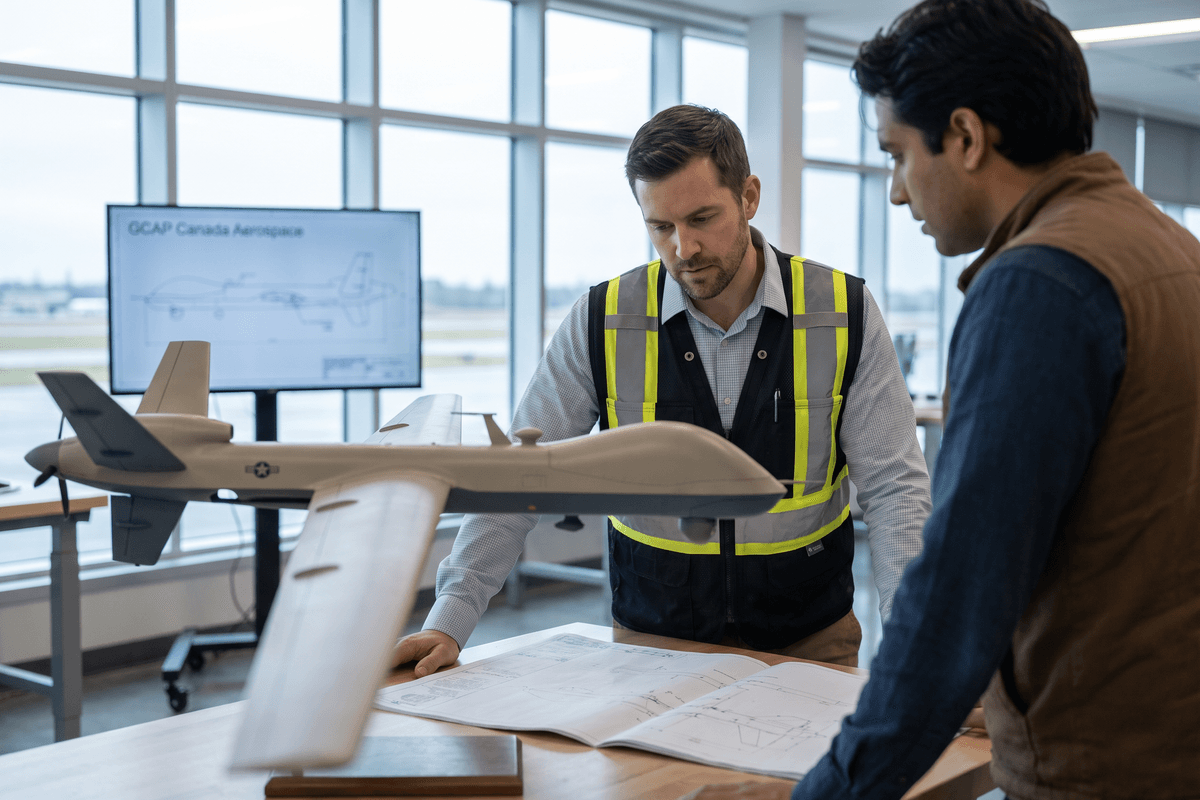



When the federal government recently secured observer status in the Global Combat Air Programme (GCAP), it barely registered on the radar of the average Canadian. But for the nation's engineering sector, it signals a generational pivot. GCAP—a massive multinational initiative led by the UK, Japan, and Italy to develop a sixth-generation stealth fighter—is fundamentally a system-of-systems engineering challenge. Canada's entry into this fold is not merely a defense procurement maneuver; it is a strategic insertion into one of the most advanced technology supply chains on the planet.
For Canadian engineering professionals, this development bridges three critical domains: advanced aerospace design, world-class robotics, and the specialized industrial construction required to build out the domestic R&D infrastructure. As we look toward the 2030s, the convergence of these fields will redefine the skill sets, capital investments, and operational strategies of Canada's leading engineering firms.
The GCAP Mandate: Engineering a System of Systems
Sixth-generation air combat is no longer just about aerodynamics and thrust; it is about data, sensor fusion, and autonomous teaming. The GCAP platform envisions a core manned fighter networked with a swarm of unmanned "loyal wingmen" drones, advanced orbital sensors, and cloud-based AI.
By securing observer status, Canada has positioned its domestic engineering and aerospace sectors to participate in key design and engineering activities. This is a critical opportunity for Canadian firms to export their intellectual property and integrate into a multi-billion-dollar global supply chain.
"The transition from fifth- to sixth-generation platforms shifts the engineering bottleneck from mechanical design to software, systems integration, and robotics. Canada's competitive advantage doesn't lie in building airframes, but in engineering the autonomous nervous system that controls them."
Redefining Aerospace Competencies
The engineering demands of GCAP represent a stark departure from legacy aerospace projects. The table below outlines the shift in required competencies for firms looking to capitalize on this defense tech renaissance:
| Capability Domain | Traditional Aerospace Engineering | Next-Gen (GCAP) Engineering Focus |
|---|---|---|
| Flight Systems | Manned, pilot-centric avionics | System-of-systems, autonomous drone integration |
| Manufacturing | Standalone domestic assembly | Distributed global supply chain, digital twin prototyping |
| Materials | Standard composites and alloys | Radar-absorbent metamaterials and extreme thermal management |
| Data Processing | Isolated, platform-specific sensor data | Cloud-based, AI-driven sensor fusion across multiple domains |
The Autonomy Advantage: Leveraging Canada's Robotics Pipeline
If Canada is to contribute meaningfully to GCAP's "loyal wingman" and autonomous systems requirements, it must lean heavily on its existing robotics ecosystem. Fortunately, the talent pipeline is already primed.
A prime example of this domestic capability is the ecosystem surrounding the University of Waterloo. Recently, an alumnus and co-founder of Clearpath Robotics highlighted the wealth of expertise on the Waterloo campus as a foundational element of the company's global success. Clearpath, known for its rugged, autonomous ground vehicles, exemplifies the exact type of autonomous systems engineering that defense programs like GCAP are desperate to integrate.
For engineering firms, the implications are clear: the defense sector is coming for your robotics and AI talent. To compete, firms must:
- Aggressively recruit from top-tier mechatronics programs: Universities like Waterloo, U of T, and McMaster are the new battlegrounds for defense engineering talent.
- Cross-pollinate civil and defense IP: Technologies developed for autonomous mining vehicles or automated pipeline inspections have direct applications in defense robotics.
- Invest in security clearances: A major bottleneck for Canadian firms entering the defense space is the time and capital required to secure Controlled Goods Program (CGP) and security clearances for their engineering teams.
The Economic Reality: Building the R&D Infrastructure
Participating in a program like GCAP requires more than just software developers; it requires physical infrastructure. Advanced manufacturing facilities, secure data centers for AI training, and specialized testing environments must be built. However, this infrastructure push is colliding with a complex construction economy.
According to the latest Construction Economics data from Engineering News-Record (ENR) for July 2026, the industry is navigating a paradoxical environment. While supply chain pressures for basic materials have somewhat stabilized, the cost of specialized labor and high-tech mechanical, electrical, and plumbing (MEP) systems remains at a premium.
Navigating Capital Constraints
For Canadian EPC (Engineering, Procurement, and Construction) firms tasked with building the defense-industrial base, the ENR data underscores several critical trends:
- The Premium on Specialized Facilities: Building SCIFs (Sensitive Compartmented Information Facilities) or advanced radar testing labs requires highly specialized structural and electrical engineering. The margins on these projects are high, but so is the risk of cost overruns.
- Inflation in MEP Sectors: While structural steel and lumber may see price stability, the advanced HVAC systems required for supercomputing centers (essential for GCAP's AI development) are experiencing significant cost inflation.
- Alternative Project Delivery: To mitigate these economic pressures, we are seeing a shift toward Integrated Project Delivery (IPD) and progressive design-build models for defense infrastructure, ensuring cost certainty earlier in the lifecycle.
The Path Forward for Canadian Engineering
Canada's integration into the Global Combat Air Programme is a loud signal to the domestic engineering market. It validates the country's strategic investments in AI and robotics while highlighting the urgent need to scale our defense-industrial infrastructure.
For engineering leaders, the mandate is twofold. First, firms must actively bridge the gap between traditional aerospace engineering and modern autonomous systems, tapping into rich talent veins like the Waterloo robotics ecosystem. Second, infrastructure and construction engineering firms must adapt to the economic realities of building high-security, high-complexity facilities in a tight economic environment.
The GCAP observer status is not just a seat at the table—it is a blueprint for the next decade of Canadian engineering innovation. Those who can align their talent acquisition, operational security, and project delivery models to meet this advanced manufacturing pivot will find themselves at the forefront of a multi-billion-dollar global industry.