Dish/engine systems convert the thermal energy in solar radiation to mechanical energy and then to electrical energy
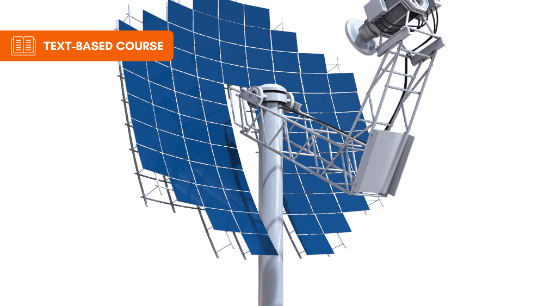
Dish/engine systems convert the thermal energy in solar radiation to mechanical energy and then to electrical energy in much the same way that conventional power plants convert thermal energy from combustion of a fossil fuel to electricity. They use a mirror array to reflect and concentrate incoming direct normal insolation to a receiver, in order to achieve the temperatures required to efficiently convert heat to work. This requires that the dish track the sun in two axes. The concentrated solar radiation is absorbed by the receiver and transferred to an engine. They are characterized by high efficiency, modularity, autonomous operation, and an inherent hybrid capability (the ability to operate on either solar energy or a fossil fuel, or both). Of all solar technologies, dish/engine systems have demonstrated the highest solar-to-electric conversion efficiency (29.4%), and therefore have the potential to become one of the least expensive sources of renewable energy.
Topics: System Description Solar Concentrators Tracking Systems Receivers Engines (converts heat to mechanical power) The Dish/Brayton Power Cycle Ancillary Equipment History of the Dish Engine System Applications, Benefits, Impacts Utility (Grid) Application Remote Applications Hybridization with a Fossil Fuel Combustor Environmental Impacts of Solar Dish Engine Systems Technology Assumtions and Issues Research and Development Needs Advanced Development opportunities Performance and Costs Land, Water, and Critical Resource Requirements.
Intended Audience: for energy, mechanical, electrical, construction, and civil engineers. However, this course could appeal to engineers of other disciplines as well.. An attendee of this course will gain knowledge about the solar power tower concentrating solar technology.
Publication Source: US Dept. of Energy

Dr. Harlan Bengtson is an online PDH course provider of continuing education courses for professional engineers. Dr. Bengtson is a graduate of Iowa State University with B.S. and M.S. degrees and of the University of Colorado with a PhD. He is a licensed Professional Engineer in Missouri. Dr. Bengtson has spent 30 years in engineering education in teaching and administrative positions, including six years as Dean of Engineering at Southern Illinois University Edwardsville. Dr. Harlan H. Bengtson, PE 33 Grainey Drive Glen Carbon, IL 62034 Phone: (618) 406-6892 E-mail: hnkbengtson@yahoo.com PROFESSIONAL PROFILE Dr. Bengtson is a graduate of Iowa State University with B.S. and M.S. degrees and of the University of Colorado with a PhD. He is a licensed Professional Engineer in Missouri. He has spent 30 years in engineering education in teaching and administrative positions, including six years as Dean of Engineering at Southern Illinois University Edwardsville. His areas of expertise are environmental engineering, hydrology and hydraulics, engineering science and renewable energy systems. He has done regular consulting work while holding the academic positions. Prior to entering academia, Dr. Bengtson worked for Minnesota Mining & Manufacturing as a Product Development Engineer and for E. I. duPont deNemours as a Process Development Engineer. Dr. Bengtson has authored numerous publications, presentations and technical reports. He is currently active as a freelance technical writer, author of continuing education courses for Professional Engineers, and is the founder of www.engineeringexceltemplates.com and www.EngineeringExcelSpreadsheets.com, sites with the objective of providing inexpensive, easy to use Excel spreadsheets for a variety of engineering calculations.
