You will encounter digital circuits multiple times in any given day. Digital circuits have infiltrated society in ways unheard of only a few decades ago. They are everywhere and seem to be in everything.
Without them, we would have no microprocessors. Without microprocessors, we would have no computers, smartphones, sophisticated fifth-generation fighter jets, or even something as simple and convenient as a coffee maker that brews the coffee before we wake up. These devices can shut off automatically when we forget to turn them off. Maybe we could still design a coffee maker with an analog clock and a mechanical switch that shuts off the hot plate when the clock advances past a mechanical set point. But the point is that these little devices—digital circuits—are commonplace and here to stay.
Digital circuits consist of tiny little on/off switches called transistors. The transistor is the building block of all digital circuits. This revolutionary little switching device was invented in 1947, and its creators were awarded the Nobel Prize in Physics a few years later—and rightly so. Only a few other inventions have impacted our lives in so many ways.
Transistors can be organized into logic gates. The most basic gates are AND, OR, and NOT. With these fundamental gates, all other gates can be built. Boolean algebra describes logic gates in symbolic form, which gives a designer the ability to create a complicated logic circuit using math by forming equations. These equations are directly transformed into logic symbols and then into a logic circuit.
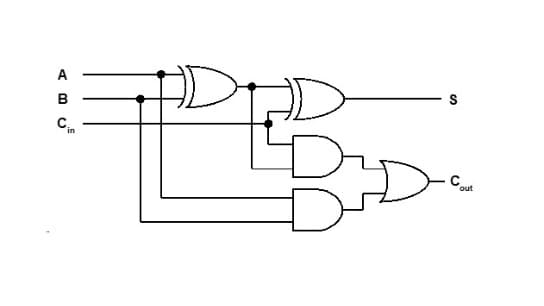
Connecting several logic gates together forms something called combinational logic. With this combinational logic, devices such as adders, encoders, decoders, multiplexers, and demultiplexers can be fabricated. A multiplexer is a device that allows one output to be selected from several inputs. An arithmetic logic unit (ALU) is a type of multiplexer and is at the heart of a microprocessor's core.
This course is intended to be a review of the basics of digital logic, starting with the binary numbering system, hexadecimal numbering system, logic gates, and logic circuits. It will cover the basic logic gates, adders, decoders, encoders, multiplexers, and demultiplexers. This course includes many sample problems and teaches by showing examples.

Mark Strain has over 25 years’ experience in designing and developing embedded systems ranging from precise time and frequency standards, remote monitoring systems, cryptographic communications equipment, and advanced weapon systems for the warfighter. He has designed and developed systems with 8-bit microcontrollers in bare metal systems and systems with complex real time embedded operating systems on 32-bit microprocessors. He is currently a Software Engineering Manager for a large defense contractor. He has a Bachelor of Science degree in Electrical Engineering from the University of Central Florida and a Master of Science degree in Electrical Engineering from the University of South Florida. He is a registered Professional Engineer in the State of Florida. He has written many courses for Professional Engineers for continuing education in the areas of computer engineering and electrical engineering. He enjoys studying cosmology and is a published author of Cosmic Entity: A Timeless Perception of the Universe. He lives in Winter Garden, FL with his wife and two children.
