Discover proven architectural strategies to conceptualize iconic cultural spaces, craft compelling proposals, and captivate juries in highly competitive bids.
Architectural competitions can do far more than select a design—they can create meaningful partnerships, strengthen community engagement, and produce culturally authentic outcomes. This session explores an innovative competition model developed for the Nunavut Inuit Heritage Centre, demonstrating how procurement processes can be reimagined to prioritise collaboration, cultural understanding, and long-term project success.
Using a detailed case study, participants will follow the project's journey from early stakeholder discussions through qualifications, design workshops, jury deliberations, and final selection. The session examines how community voices were embedded throughout the process, how competing design teams engaged directly with local stakeholders during an immersive "design-a-thon," and how this collaborative approach produced stronger design outcomes than a traditional architectural competition.
Attendees will gain practical insights into structuring architectural competitions, balancing design excellence with cultural responsiveness, facilitating meaningful consultation, and selecting design teams capable of delivering complex civic and cultural projects that genuinely reflect the communities they serve.

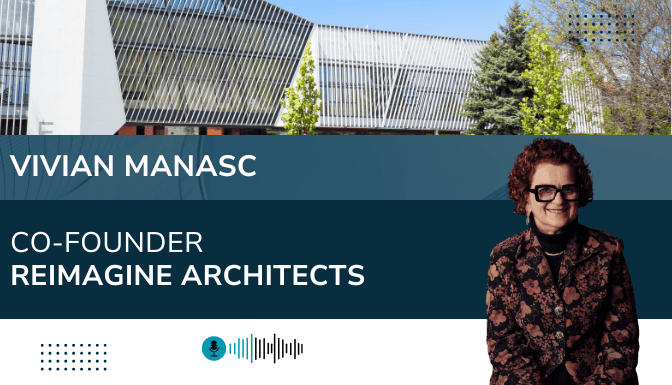
Co-Founder | Reimagine Architects
Since before the beginning of her career as an Architect, creative collaboration has been the foundation of Vivian’s work. Open-minded, creative, and optimistic, Vivian has found inspiration in the myriad chapters of her life’s journey, beginning with her immigration to Canada as a child. She spent her childhood and adolescence in the beautiful city of Montreal and studied Architecture at the time of the first energy crisis, before moving to Edmonton. From there, she travelled globally and within Canada, visiting and building relationships with numerous Indigenous communities across the country. Working for decades in the north, Vivian honed her cold-climate design skills and cultivated the values of inclusivity, co-creation, and environmental and spiritual sustainability that would guide her practice as an Architect, Principal, and industry leader. Vivian is “endlessly interested” in the idea of co-creating a better world and believes deeply in fostering organizations, environments, and spaces where community and creativity can flourish. It is in this all-embracing spirit of co-creation that she approaches her role as a leader of Reimagine. As she sees it, her primary responsibility is providing “the stability and nurturing for the team to grow,” and it is through her continuous encouragement of a healthy and integrated way of life that Reimagine has become one of the world's most respected and successful design firms. “Life is like water,” she says. “Work and life are not separate; everything flows together.” Her role as a leader is not confined to her position as a principal of the firm. Always looking for opportunities to make the biggest impact, Vivian has been co-creating myriad projects of unprecedented vision since the beginning of her career. Vivian has long championed sustainable building practices on a national and global scale, playing a key part in the development of the Canadian LEED® Green Building Rating system and the founding of the Alberta Sustainable Buildings Symposium, now in its 27th year. Among her countless accolades, she was recently honoured with the Alberta Order of Excellence Award in 2017 and an Honorary Doctor of Laws from the University of Alberta in 2019. The importance she places on community engagement has also made Vivian a champion of accessibility in education. During her time as President of the Royal Architectural Institute of Canada (RAIC), she envisioned and co-created Canada's first online Architecture program at Athabasca University. Over ten years later, this program now boasts the largest enrolment of any architectural school in Canada. Vivian recently served as Chair of the University’s Chair of the Board of Governors.
